


New square-mesh extension piece achieves major improvements in catch composition and value in the Celtic Sea seine-net fishery
Ronán Cosgrove and Martin Oliver, Fisheries Conservation Section, BIM
BIM works closely with the Irish fishing industry on reducing unwanted catches and optimising quota utilisation both in terms of commercial viability and stock conservation. Celtic Sea haddock quotas were reduced from 1,182 tonnes in 2025 to 329 tonnes in 2026 and, under remedial stock conservation measures, are currently categorised as exclusively for bycatches. This raises challenges, particularly for seiners which have traditionally been quite reliant on Celtic Sea haddock and have limited scope to switch to other fisheries.
Seiners also catch hake and a mixture of other fish and flatfish species and it is essential that they optimise the size and species composition of their catches to help sustain operations in these challenging times. Ireland has a small cod quota in Norwegian waters where vessels are required to use a 12 m square-mesh extension piece ahead of the codend to optimise species size composition and conservation. Positive Irish industry feedback on this measure resulted in an industry-led gear trial aimed at evaluating this measure in the Celtic Sea seine-net fishery.
The trial was conducted on board the 27 m Ocean Crest targeting mixed-demersal fish species in ICES Divisions 7g and 7j in November 2025. Following BIM protocols, the crew compared catches from a net with 100 mm square-mesh extension piece with those from a net with a standard 100 mm diamond-mesh extension piece. Both nets were fitted with 100 mm T90 codends which substantially reduce juvenile fish catches and were previously introduced as a gear measure based on research by BIM and the Irish fishing industry. Key species were graded into large marketable fish and small fish which fell below minimum conservation reference or market size. We used follow-up sales notes data to analyse differences more thoroughly in catches of larger fish.

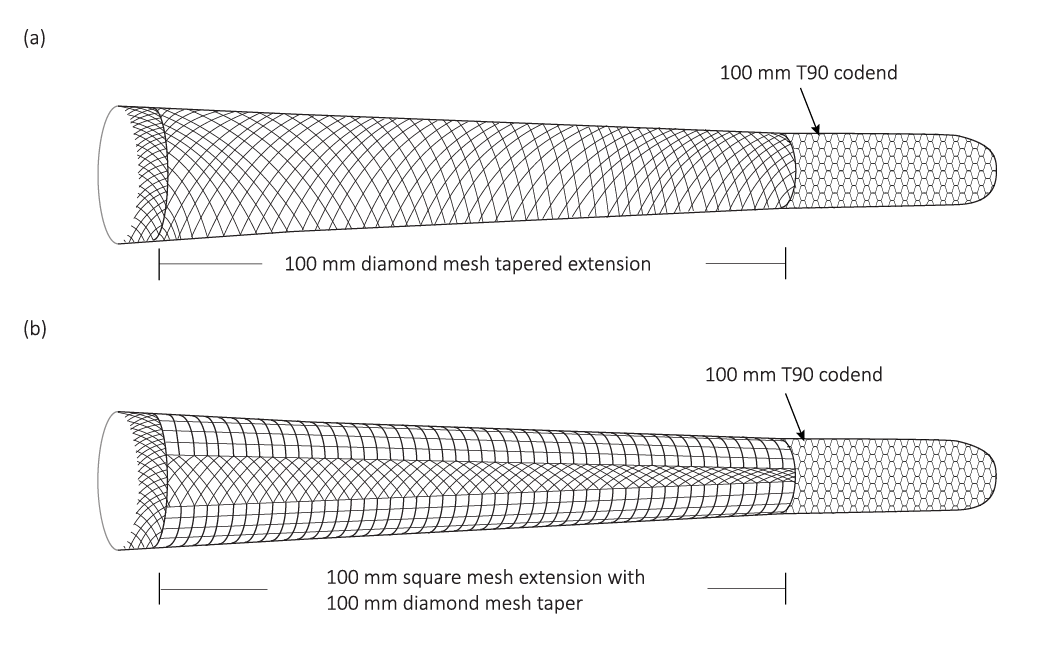
Small haddock, hake and flatfish catches were reduced by 70%, 56% and 50% respectively, likely due to enhanced escape opportunities through greater mesh openings in the square-mesh extension piece. Greater quantities of larger size grade haddock, hake and mixed fish were retained likely due to enhanced water flow through the net from increased mesh openings. This resulted in an overall 18% increase in the value of trip landings.
Study results suggest that the square-mesh extension piece can greatly assist seine vessels in optimising the composition and commercial value of their catches. The substantial reductions in small fish catches significantly assists in meeting landing obligation requirements. Furthermore, these small fish are more likely to escape the net in deeper water which helps minimise injuries and mortalities from rapid changes in pressure during hauling leading to greater improvements in stock conservation.

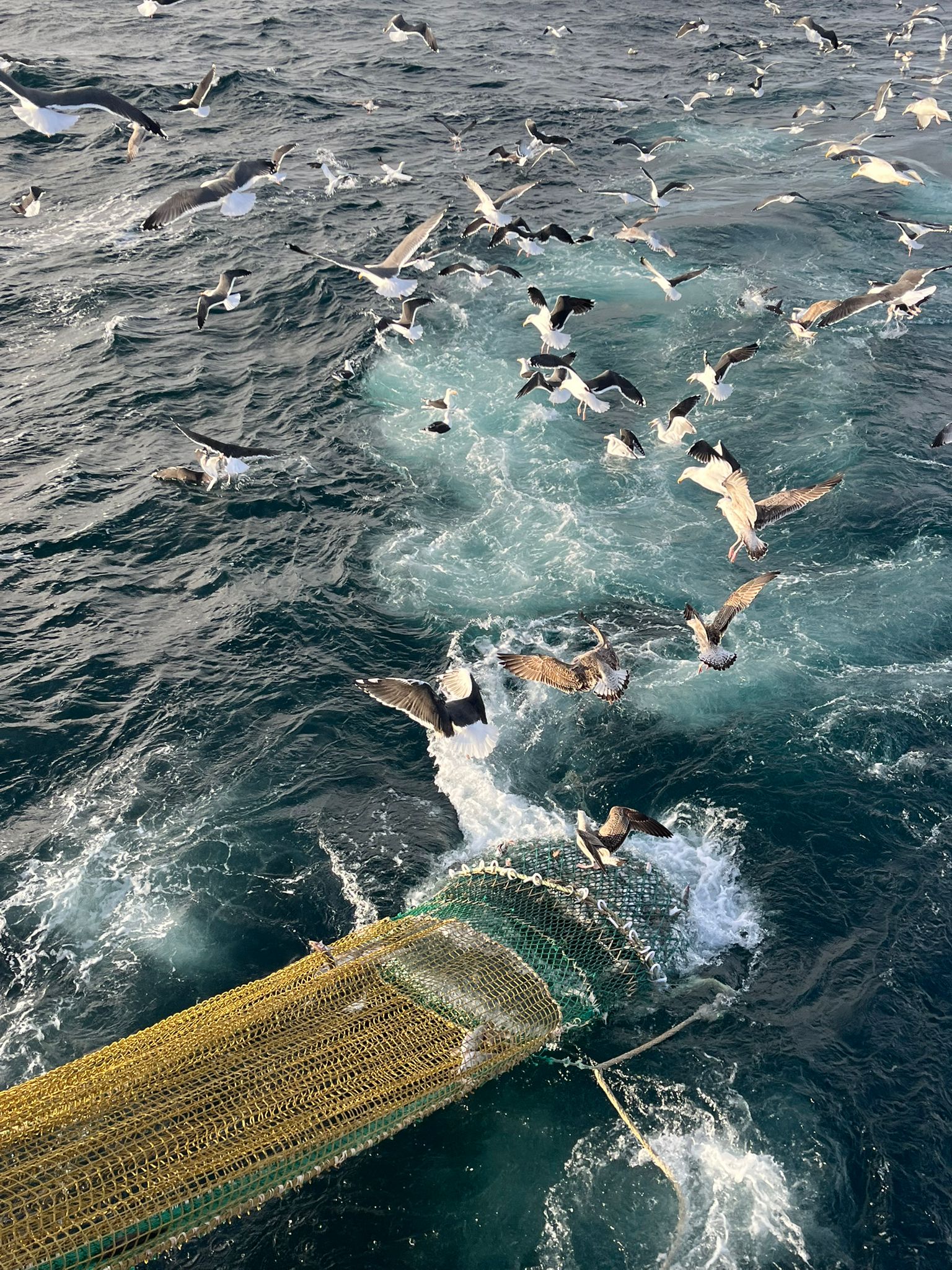 Codend No 2
The square-mesh extension is an inexpensive gear modification which can easily be mounted on an existing net and has major scope for implementation across seine and trawl fisheries for whitefish species in Irish waters.
BIM would like to thank the skipper Robert Kane, owners Anthony, Gerard and Ronan Sheehy and crew of the MFV Ocean Crest for a successful collaboration. This work was funded by the Irish Government and part financed by the European Union through the EMFAF Operational Programme 2021 – 2027. The full report is available at www.bim.ie/publications/fisheries.


